


Cooking When Depressed: What Meals Taste Like in Melbourne
I didn’t want to cook. Again.
Didn’t want to eat either. But not eating calls attention. Friends asks if I’m fasting. Wife texts to check if I’m alive. Everyone gets twitchy when the stove stays clean too long.
Pots untouched. Not dirty—just… still.
Melbourne winter hits different when you haven’t fed yourself in two days. Not cold like Europe. Wet. Windy. Like the city’s spitting on you. Melbourne doesn’t freeze you. It irritates you. Like getting a fine you can’t appeal.
Fridge creaks open. Then again. Ten times. No hunger. Just the door talking back.
This is what cooking when depressed looks like.
Last Week’s Lentils
I’ve made the same lentils twenty-three times.
Brown ones. Cheap. Last forever. Barely taste like anything unless you crank the spice. Turmeric first. Then garlic. Then cumin. Onion if you remember. Forgot last time. Didn’t matter.
Last time I cooked them, I stared into the pot while they boiled down too far. Burnt the bottom. Ate them anyway. Tasted like metal and resignation.
That’s the thing about depression and lentils. They forgive you. You can fuck it up and they’ll still show up. Not like eggs. Eggs need attention. Timing. Dignity. Lentils just need time and water. Same as grief.
The Kebab Stall Next to the Bottle-O
Cheap doner joint. Open late. Guy behind the counter always looks tired but not angry. Never fakes a smile. Respect that.
I walk in. The smell hits hard. Lamb fat. Old fry oil. Garlic sauce that stays on your hands til morning. It’s not beautiful. It’s blunt. Honest.
He nods once. Doesn’t ask me what I want. Just starts cutting. I guess I’m predictable.
He works fast. Hands stained brown-red. Knuckles peeling. Gloves optional. Doesn’t look up much. Focused on the meat. Bread warmed on the press. Sauce pumped on automatic. This is not a performance. It’s survival on autopilot. I relate to that.
Ten bucks. Cash only. I drop coins on the counter. He scoops them like they might burn. Doesn’t count.
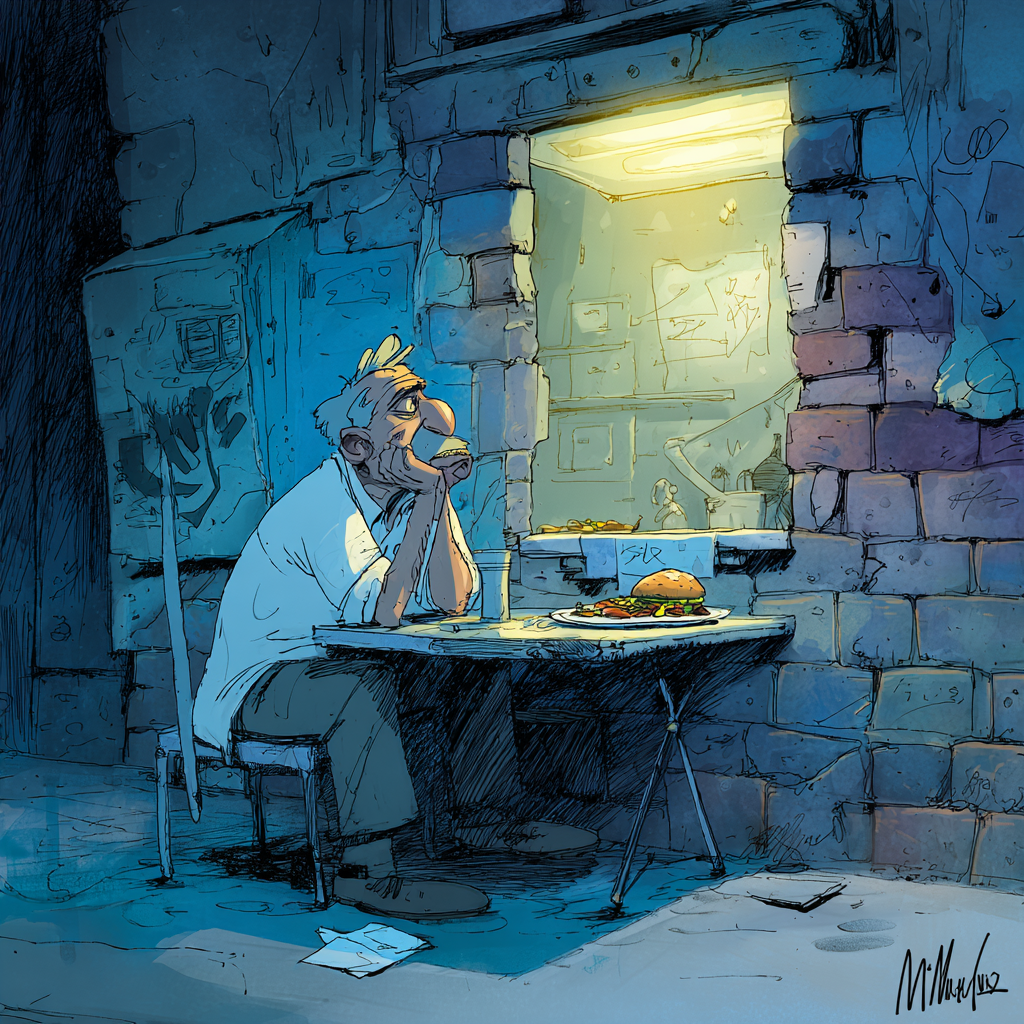
I sit at the plastic folding table outside. Chair still warm from someone else. Wrapper sticks to my fingers. Lamb hits hard. Chilli hits harder. I don’t even taste it. Doesn’t matter.
Two bites in, I realize I’m not thinking. That’s the win tonight.
Cooking When Depressed
There’s no music. No wine. No ceramic bowls with that annoying hand-thrown wobble. Nobody’s snapping shots of “what’s for dinner tonight, fam?”
Just heat. Fat. Salt.
Just trying to stay alive.
I keep thinking about how food became theatre. Props. Mise en fucking scène. Cookbooks with textured covers. Dinners where everybody lies.
Cooking when depressed strips that bullshit. No appetite for pretense.
You boil rice because you have to. Not for variety. Not for culture. For bulk. For blunt calories.
Some nights I don’t even salt the water. Salt feels like effort.
The Boy With the Grease Burns
He showed me his scar once. Not the guy from the doner stall. Another kid. Burmese. Fry cook at my mate’s place. Late shift. Four deep pans. One for chips. One for chicken. Two hybrid horrors that smell like gas and sorrow.
Burned his whole forearm three months ago. Blistered like tar bubbling on a road under sun. Finished his shift. Didn’t tell anyone. Said his visa was too fragile for hospitals. Said burns feel less dangerous than bosses who think you’re replaceable.
He kept coming to work. Bandaged with a kitchen rag. You could smell the bandage after four days.
I said, “You hate it, right?”
He stared at the fryer. “Worse on the border.” Shrugged. Like that explained the grease burn.
The food still sells. Gets good reviews. Crispy. Golden. Crowd-pleaser.
I’ve eaten it. I’ve said “perfect crunch.” I’ve licked the fucking grease off my fingers.
The Pan Didn’t Lie
Tried cooking again last night. Scrambled eggs.
Just eggs. Didn’t even toast the bread. No herbs. No cracked pepper.
Pan stuck because I didn’t preheat. Scrape scrape scrape. Silence too loud.
I don’t know what stopped me from walking out. Pan in sink. Eggs in trash. Back to the couch. Let hunger scream itself out. It usually does.
But I ate.
Not because they were good. Not because I wanted. Just because the plate was hot, and my hunger was real enough to answer.
Everything shuts down. Food still speaks. Nothing else does.
Even tasteless, it says something. Says stay.
Sometimes, that’s the whole point.
Walking Home, Still Burping Garlic
The kebab didn’t fill me. It stunned me. Punched the hunger in the ribs but didn’t kill it.
Walking past the same cracked sidewalk. Past two Uber Eats drivers checking the map. Same bin overflowing with mystery bags. Same wet newspaper, still stuck to the curb from yesterday’s rain.
I smell the garlic on my jacket. It’s in the sleeves. Won’t wash out easy.
That garlic hit used to mean beer. Loud friends. Messy joy.
Now it just means I tried.
Didn’t feel like cooking. Didn’t feel like eating. But I put something in my mouth that wasn’t despair.
Some days, that’s the most honest meal you’ll get.
